
How Much Gypsum Powder Do I Need?
Planning a villa renovation in Dubai, a new apartment fit-out in Abu Dhabi, or a commercial ceiling project across the UAE? One of the most frequent questions contractors, designers, and homeowners ask is: “How much gypsum powder do I need?” Knowing the exact quantity prevents costly over-ordering or frustrating shortages mid-project.
Gypsum plaster powder remains the preferred choice for smooth, crack-free interior finishes in 2026 because of its excellent workability and fast setting. Whether you are using standard gypsum powder, white gypsum powder, POP gypsum powder, or fine gypsum powder for decorative work, accurate coverage calculation is essential for efficient budgeting and flawless results.
This guide answers the most common questions about coverage, provides a practical calculator you can use immediately, and shares real-world tips from professionals working on villas and high-end interiors. By the end, you will confidently know exactly how many bags to buy gypsum powder for your walls and ceilings.
Understanding Gypsum Powder Coverage: The Basics Every User Should Know
Coverage of gypsum powder depends on the final applied thickness, the substrate (blockwork, concrete, or existing plaster), and the specific grade you choose. Unlike cement-based plasters, gypsum plaster powder is applied in thinner layers and sets through a chemical reaction rather than drying alone, which affects how much material you actually consume.
In practice, the industry standard for gypsum plaster powder consumption is approximately 0.9 to 1.1 kilograms per square meter for every millimeter of thickness. This factor accounts for the material’s density after mixing and setting. For a typical 12 mm skim coat on internal walls, you can expect to use between 10.8 and 13.2 kg of gypsum powder per square meter.
Ceilings usually require thinner applications — often 6 to 10 mm — because they do not need the same structural leveling as walls. This naturally improves coverage per bag. Understanding these basics helps you avoid the common mistake of using the same rate for both walls and ceilings, which can lead to significant ordering errors.
Key Factors That Affect Gypsum Powder Coverage in Real Projects
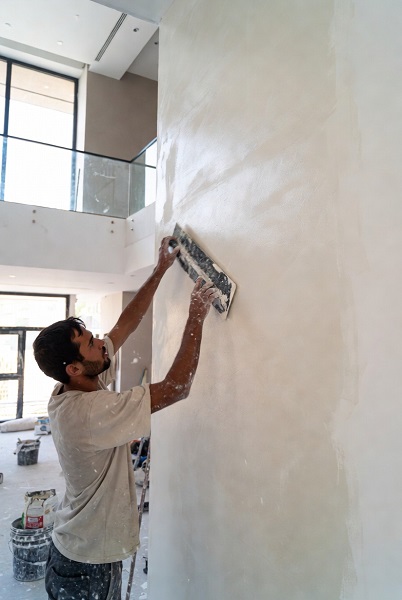
Several practical factors influence how far one bag of gypsum powder will actually go on your site. Surface texture plays a major role: rough blockwork absorbs more material than smooth concrete, increasing consumption by 10–15%.
Environmental conditions in the UAE, particularly high humidity and temperature fluctuations, can affect setting time and therefore how evenly the plaster gypsum powder spreads. Hot, dry conditions may require a slightly wetter mix, which can improve flow but slightly reduce final coverage if not controlled.
“maintenance tips for gypsum decoration in humid UAE climate“.
The grade of powder you select also impacts coverage. Standard gypsum plaster powder for general walls offers solid coverage, while fine gypsum powder or POP gypsum powder used for decorative ceilings and cornices is applied in thinner layers and therefore stretches further per kilogram. Always factor in 10–15% wastage for cutting, mixing losses, and site conditions when calculating your total requirement.
Standard Coverage Rates for Walls Using Gypsum Plaster Powder
For typical internal wall plastering in UAE villas and apartments, a 10–12 mm thickness is standard. Using the industry benchmark of 0.9–1.1 kg per m² per mm, a 20 kg bag of high-quality gypsum powder will cover approximately 1.5–1.85 m² at full 12 mm thickness on blockwork surfaces.
When applying a thinner finish coat of 3–5 mm over a leveled base, the same 20 kg bag can easily cover 4–6 m². This two-coat approach is common in high-end projects where a perfectly smooth, paint-ready surface is required. White gypsum powder performs exceptionally well in these finish coats because of its superior flow and minimal shrinkage.
Professionals working on large villa projects often report that one 20 kg bag of Al Ahli gypsum plaster powder consistently delivers reliable coverage when mixed and applied according to best practices. The key is maintaining the correct water-to-powder ratio and working within the recommended setting window to avoid rework that wastes material.
“Step-by-Step Guide to Using Gypsum Powder for Wall Coating“.
Standard Coverage Rates for Ceilings and Decorative Applications
Ceilings in modern UAE homes and commercial spaces are typically plastered at 6–10 mm to keep weight low and maintain a clean, elegant appearance. At this reduced thickness, coverage improves significantly: a 20 kg bag of gypsum powder will usually cover 2.0–3.3 m² depending on the exact depth and surface preparation.
For intricate decorative ceilings using POP gypsum powder or fine gypsum powder, the application is often even thinner — 2–4 mm for skim coats or molding work. In these cases, the same bag can stretch to 5–8 m² or more, making it highly economical for cornices, domes, and false-ceiling details.
The reflective nature of ceiling surfaces also means that any unevenness shows dramatically under artificial lighting, so using best gypsum powder with excellent workability helps achieve full coverage without excess material. Many designers prefer fine gypsum powder here because its ultra-smooth texture reduces the need for multiple passes and sanding.
Easy-to-Use Calculator: How Much Gypsum Powder Do You Really Need?
Calculating your exact requirement is straightforward with this practical formula that professionals rely on daily:
Total kg required = Area (m²) × Thickness (mm) × 0.9 to 1.1 + 10–15% wastage
For a quick example: a 120 m² villa with 12 mm wall plaster and 8 mm ceiling plaster would need approximately 1,300–1,600 kg of gypsum powder after adding wastage. That translates to roughly 65–80 bags of 20 kg each.
You can adapt this calculator for any project size. Measure your walls and ceilings separately, apply the appropriate thickness for each, and always add the wastage buffer. For complex layouts with many corners or decorative features, increase the wastage allowance to 15–20% to stay safe.
Al Ahli Trading’s technical team offers free project-specific calculations when you share your drawings or dimensions. This personalized service ensures you order precisely the right quantity of gypsum plaster powder for your walls and ceilings.
Real-World Examples: Coverage for Typical UAE Villa and Apartment Projects
Consider a standard 300 m² villa with 250 m² of walls and 50 m² of ceilings. Using 12 mm on walls and 8 mm on ceilings, you would need roughly 3,000–3,600 kg of gypsum powder including wastage — about 150–180 bags of 20 kg. This matches what many contractors report for mid-range villas in Dubai and Abu Dhabi.
For a smaller 80 m² apartment, the total often falls between 800–1,000 kg, or 40–50 bags. Decorative ceilings using fine gypsum powder or POP gypsum powder in the same apartment can reduce overall consumption because of the thinner application layers required for elegant detailing.
These real examples highlight why accurate calculation matters: ordering just 10% extra can add hundreds of kilograms unnecessarily, while under-ordering causes delays and color variations between batches.
Practical Tips to Maximize Coverage and Minimize Waste on Site
Proper mixing technique is the single biggest factor in achieving optimal coverage with gypsum powder. Always add the powder gradually to clean water and mix for 2–3 minutes until lump-free. Over-mixing introduces air bubbles that reduce effective yield, while under-mixing leaves dry pockets that waste material.
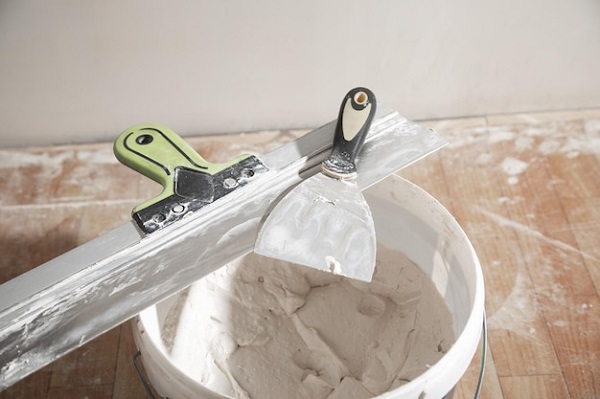
Apply the plaster in consistent passes and use the right tools — a steel trowel for walls and a feather-edge for ceilings helps achieve uniform thickness with less excess. Working in manageable sections prevents the mix from setting before you finish spreading it.
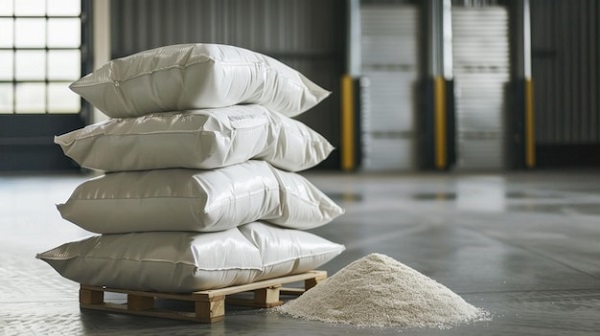
Store bags in a dry, elevated area to protect the best gypsum powder from moisture, which can cause premature setting and reduced coverage. By following these simple on-site practices, many UAE contractors report stretching their gypsum plaster powder 10–15% further than expected.
Choosing the Right Grade of Gypsum Powder for Maximum Efficiency
Not all gypsum powder performs the same when it comes to coverage. Standard plaster gypsum powder is ideal for general wall leveling where thickness is greater. For ceilings and decorative elements, fine gypsum powder or POP gypsum powder offers better flow and therefore superior coverage in thinner applications.
White gypsum powder from Al Ahli Trading is formulated to deliver consistent results across both walls and ceilings, with minimal shrinkage that preserves every kilogram of material you apply. Choosing the grade that matches your specific thickness and finish requirements is one of the smartest ways to optimize coverage.
When you buy gypsum powder directly suited to your project type, you not only achieve better coverage but also enjoy smoother application and a more professional final appearance.
Conclusion: Plan Smart and Finish Strong with the Right Gypsum Powder
Accurate calculation of gypsum powder needs for walls and ceilings saves time, money, and stress on every project. By using the simple formula, factoring in real-world wastage, and selecting the appropriate grade, you can order with confidence and complete your plastering efficiently.
Ready to get the perfect quantity for your next walls or ceilings? Explore Al Ahli Trading’s premium gypsum plaster powder today. Our team is ready to help you calculate exactly what you need for flawless results across the UAE.